Personalized Mom Laser Cut File Bundle Review
As a designer who bridges the gap between digital fabrication and needlework, I often evaluate assets that cross over between laser cutting and embroidery. When I first opened the Personalized Mom Laser Cut File Bundle, my immediate thought was not about the laser cutter, but about how this intricate floral vase motif would translate into a machine embroidery design. While marketed primarily for laser applications, the structural integrity of this family tree SVG offers a unique foundation for mixed-media projects. For Etsy sellers and small shop owners looking to create high-value Mother’s Day merchandise, understanding how to adapt this vector art for stitching is crucial for maintaining product quality and customer satisfaction.
Translating Vector Lines to Stitch Logic
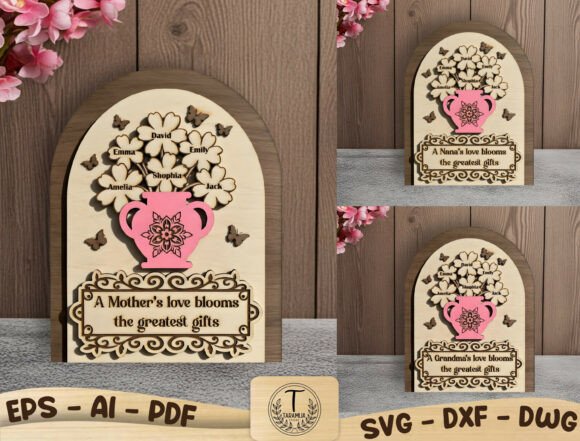
The visual personality of this bundle is undeniably elegant. It features a blooming flower arrangement inside a decorative vase, where each flower represents a family member. From a pure design standpoint, the balance is excellent; the weight of the vase anchors the composition while the organic curves of the stems draw the eye upward. However, as an embroidery digitizer, I look at these clean vector lines and immediately assess stitch density and pathing. A file optimized for laser cutting relies on continuous cut lines, whereas an embroidery file requires jump stitches, trims, and specific underlay structures.
If you are using this bundle as a base for digitizing, do not simply run it through auto-digitizing software. The delicate petals that look beautiful when burnt into wood will likely turn into a dense, bulletproof mass of thread if converted directly to satin stitch without modification. For a successful applique design adaptation, I recommend using the laser file as a precise placement guide. You can actually laser-cut the fabric pieces using this file, then use those exact shapes in your embroidery hoop. This hybrid approach ensures perfect alignment and reduces the bulk of fill stitch, resulting in a softer, more professional finished product.
Real-World Application: The Custom Tote Bag Test
To truly evaluate the commercial viability of the Personalized Mom Laser Cut File Bundle, I mentally prototyped a custom canvas tote bag intended for a boutique spring collection. Tote bags are a staple for craft businesses because they offer a large, flat canvas ideal for detailed family tree motifs. In this scenario, the challenge is scale versus detail. The original design includes personalization elements within the flowers. On a 14x14 inch tote, this works beautifully. However, if a client requests a smaller 8x8 inch version for a cosmetic pouch, those tiny personalized details risk becoming illegible after stitching.
During my assessment, I considered how this design interacts with the texture of natural canvas. Canvas has a coarse weave that can swallow fine running stitch details. If you are creating tote bag design products from this bundle, you must increase the column width of any text or thin stem lines. A standard 0.5mm line might disappear into the fabric grain. Bumping key outline elements to at least 0.8mm or converting them to a lightweight fill stitch ensures the design remains crisp. Furthermore, because this is a personalized gift item, the emotional connection relies on clarity. If "Grandma" or "Mom" is stitched too small and gets lost in the texture, the perceived value of the handmade product drops significantly.
Navigating Fabric Limitations and Stabilization
Not every garment in your inventory is suitable for this specific aesthetic. The Personalized Mom Laser Cut File Bundle carries a level of intricacy that demands respect during production. I would advise extreme caution when applying this to stretchy knits like jersey t-shirts or lightweight baby onesies. The design’s density, particularly in the vase area where names converge, creates a stiff stabilizer-backed patch effect on thin fabrics. This can cause puckering or distortion that no amount of steaming can fully fix.
For sweatshirt embroidery or heavier apparel, the design performs much better. The fleece backing of a sweatshirt provides natural cushioning, allowing the satin stitch borders to sit proudly on the surface without tunneling. However, always verify your hoop size before committing. This vertical layout requires adequate top-to-bottom space. If you are forced to resize the design to fit a smaller hoop, check the aspect ratio carefully. Squashing a family tree distorts the proportions of the flowers, making the personalization tags look cramped. Always test on scrap fabric with the same weight and weave as your final project. This step is non-negotiable for maintaining brand consistency and avoiding costly reworks.
Commercial Value and Presentation Strategy
For creative entrepreneurs and digital product sellers, the versatility of this bundle extends beyond physical goods. Because it originates as a laser cut file, the vectors are mathematically perfect. This makes the Personalized Mom Laser Cut File Bundle an exceptional asset for creating printable mockups. Before you even thread a needle, you can overlay the vector design onto digital garment templates to show clients exactly what their custom family tree will look like. This capability speeds up the approval process for commercial embroidery orders and builds buyer confidence.
When listing finished items on Etsy or at craft fairs, photography is paramount. The interplay of light and shadow on embroidered thread differs vastly from flat laser engraving. Ensure your product photos capture the dimensionality of the stitch. If you are selling the digitized version as a digital embroidery file, be transparent about the origin. Customers need to know if this is a native embroidery design or a converted vector. Honesty here prevents negative reviews regarding stitch-outs. Additionally, confirm your licensing rights. Just because you purchased the laser bundle does not automatically grant permission to sell the digitized embroidery file itself. Usually, you can sell the physical embroidered goods, but reselling the digital assets requires a specific commercial license.
Designer Notes for Optimal Results
- Contrast Check: Always test thread colors against your fabric background. Pastel threads on white fabric may lack the definition needed for the intricate petal details. Consider using a slightly darker shade for outlines to enhance visual separation.
- Stabilizer Selection: For this level of detail, use a medium-weight cutaway stabilizer for knits and a tear-away for stable wovens. Floating the fabric may result in registration issues with the small personalization text.
- Detail Inspection: Zoom in to 100% in your embroidery software. Any open gaps in the vector file will become missed stitches. Close all paths before generating stitch data.
- Wash Testing: Since this is often used for items requiring frequent laundering like aprons or tea towels, perform a wash test. Ensure the satin stitch columns are wide enough to prevent fraying after multiple cycles.
- Mockup Validation: Create both light and dark background mockups. A design that pops on cream canvas might vanish on navy denim. Adjust thread palettes accordingly for different SKU variations.
Ultimately, the Personalized Mom Laser Cut File Bundle is a sophisticated starting point for makers willing to put in the technical work. It is not a plug-and-play solution for beginners, but for experienced embroiderers and business owners, it offers a pathway to creating distinctive, high-margin Mother’s Day products. By respecting the differences between laser vectors and embroidery mechanics, you can transform this digital asset into a tangible heirloom that resonates deeply with customers. Whether you are producing custom apparel, nursery decor, or holiday gifts, success lies in the thoughtful adaptation of the design to the medium of thread.