Mother's Day Mini Photo Frame Laser Cut Review
As a designer who spends more time behind an embroidery machine than at a desk, I approach every new asset with a healthy dose of skepticism. When I first loaded the Mother s Day Mini Photo Frame Laser Cut file into my software, I wasn't just looking for a pretty floral arrangement; I was evaluating structural integrity and commercial viability. For those of us running a craft business or managing an Etsy shop, a design isn't successful simply because it looks good on screen. It has to survive the needle, the wash cycle, and the critical eye of a customer buying a personalized gift.
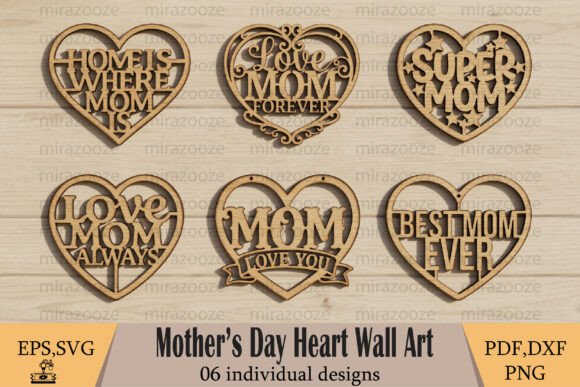
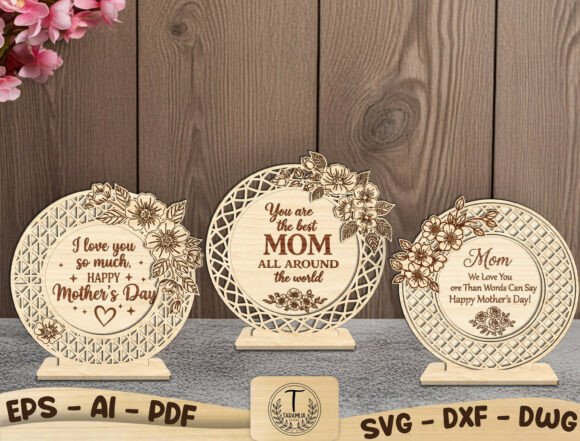
This specific design, featuring themes like "Grandmother's Garden of Love" and "Home is Where Mom Is," immediately struck me as a hybrid opportunity. While marketed heavily for laser cutting, its geometry suggests it can serve as a stunning applique design or mixed-media piece for machine embroidery. The layout balances delicate botanical elements with bold typography, creating a mood that is nostalgic yet modern. However, translating this from a digital vector to a tangible handmade product requires careful planning regarding stitch density and fabric texture.
Real-World Application: The Custom Tote Bag Test
To truly evaluate this asset, I decided to apply it to a project that is currently trending in my small shop: custom canvas tote bags for Mother S Day. Totes are unforgiving; the fabric is textured, the surface is rarely perfectly flat during hooping, and customers expect these items to be durable workhorses, not just decorative wall art.
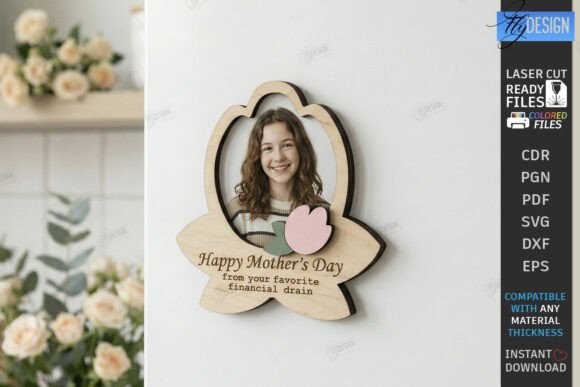
I envisioned the Mother s Day Mini Photo Frame Laser Cut design centered on a natural cotton canvas bag. The goal was to create a window effect where the photo frame acted as a focal point. In practice, this meant treating the outer floral border as a satin stitch boundary while using a running stitch guide for any potential appliqué placement. The visual personality of the design shifted beautifully once stitched. On screen, the lines look uniform, but on canvas, the interplay between the thread sheen and the matte fabric created a high-end, boutique feel. This is exactly the kind of value-add that allows creative entrepreneurs to charge premium prices rather than competing on volume alone.
However, the real test was legibility. Phrases like "Thank You For Helping Me Grow" contain smaller lettering that can easily get lost on textured fabrics. I found that increasing the spacing slightly and ensuring adequate underlay stitches were crucial. Without these adjustments, the text risked sinking into the canvas weave. For fellow apparel decorators and makers, this highlights the importance of viewing this digital embroidery file not as a final product, but as a blueprint that may need minor tuning for specific substrates.
Navigating Fabric Limitations and Hoop Constraints
While this design shines on stable mediums like canvas, denim, or twill, it demands caution when applied to stretchy or delicate materials. If you are planning baby embroidery or lightweight t-shirt projects, the stitch density of the floral frame could cause puckering if the stabilizer choice isn't precise. During my review, I noted that the corners of the frame feature intricate detailing. On knit fabrics, these detailed corners are stress points. Using a cut-away stabilizer and potentially adding a water-soluble topping is non-negotiable here to maintain registration and prevent the design from distorting after washing.
Hoop size is another practical consideration for commercial embroidery setups. Because this is a "mini" frame design, it tempts users to utilize smaller hoops. Resist this urge if your machine allows for larger ones. Hooping the garment with extra space around the design area ensures better tension control. Furthermore, if you are adapting this for curved surfaces like caps, the flat geometry of the Mother s Day Mini Photo Frame Laser Cut will require distortion correction. The straight lines of the picture frame will appear bowed on a hat unless you warp the design digitally before stitching. Always test on a scrap cap first; what works for a pillow cover often fails on headwear.
Commercial Viability for Sellers and Makers
For Etsy sellers and digital product sellers, the versatility of this design impacts buyer engagement and brand consistency. A design that only works for one niche limits your ROI. I see this asset performing exceptionally well across multiple categories:
- Personalized Gifts: The frame concept naturally invites customization, making it ideal for adding family names or dates.
- Home Decor: As a tea towel or kitchen accent, the "Home is Where Mom Is" theme resonates deeply with buyers looking for sentimental decor.
- Patches and Badges: With slight modification to the edge finish, this could easily become an embroidered patch for denim jackets.
- Digital Assets: For those selling printable mockups or design bundles, the clean lines photograph well and scale effectively for marketing materials.
The professional presentation of the finished product relies heavily on thread color contrast. During my evaluation, I tested both high-contrast (white thread on navy fabric) and low-contrast (cream thread on beige fabric) combinations. While the low-contrast version looked sophisticated and subtle, the high-contrast version sold better in mockup previews. Customers shopping online need to instantly recognize the design elements. If you are listing this as a finished product, ensure your photography captures the texture of the stitch. Flat, over-edited photos fail to convey the quality of handmade embroidery.
Designer Notes: Technical Checks Before You Stitch
Before you commit this Mother s Day Mini Photo Frame Laser Cut design to a sellable item or a cherished gift, run through this practical checklist. These steps separate hobbyist results from professional-grade output:
- Verify Licensing: Confirm whether your purchase includes commercial rights for physical products versus digital redistribution. Never assume a license covers all use cases.
- Check File Compatibility: Ensure the embroidery file format matches your machine’s requirements without conversion errors that might alter stitch direction.
- Audit Small Details: Zoom in to 400% in your software. Are there jump stitches across the open center of the frame? If so, add trims or optimize the stitch path to reduce finishing time.
- Test Stabilizer Pairings: Do not guess. Run a sample on the exact fabric you intend to use. Wash and dry the sample to check for shrinkage or tunneling.
- Evaluate Text Clarity: If personalizing the frame, verify that the font height meets the minimum threshold for your needle size. Satin stitch text below 4mm often becomes illegible.
- Mockup Reality Check: Create a black and white version of the design. If the hierarchy of the frame and text isn't clear without color, adjust the fill stitch patterns or density.
Final Thoughts on Design Integrity
The Mother s Day Mini Photo Frame Laser Cut offers a beautiful foundation for Mother S Day collections, but its success depends entirely on execution. It bridges the gap between laser-cut precision and textile warmth, provided the maker respects the limitations of thread and fabric. Whether you are creating a custom sweatshirt, a nursery keepsake, or a line of boutique tote bags, treat this design with technical intentionality.
Ultimately, customers aren't buying a digital file; they are buying trust, durability, and emotional resonance. By testing thoroughly, adjusting for fabric texture, and respecting the mechanics of machine embroidery, you transform a simple graphic into a meaningful, high-value product. Take the time to understand how this design behaves under the needle, and it will reward you with professional results that stand out in a crowded marketplace.