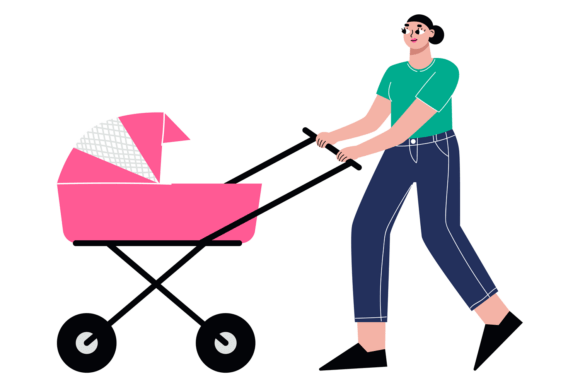
Young Mom Walk with Pram: Embroidery Review
As an embroidery designer who has digitized and stitched out countless family-themed graphics, I approach every new asset with a critical eye. When evaluating Young Mom Walk with Pram. Parent Color C, my first thought isn't just about the aesthetic appeal of the illustration; it is about how those clean vector lines will translate into physical thread on fabric. This graphic features a young mother pushing a pram, isolated on a white background, and while it serves beautifully as digital clip art, its true test lies in the hoop. For small business owners and makers, understanding the bridge between this digital file and a finished embroidered product is essential for maintaining quality and customer satisfaction.
First Impressions: Silhouette and Stitch Potential
The visual personality of Young Mom Walk with Pram. Parent Color C strikes a balance between modern minimalism and nostalgic warmth. The "Parent Color C" designation suggests a specific colorway that likely leans toward soft, neutral, or pastel tones, which is ideal for baby-related merchandise. From a digitizing perspective, the isolation on a white background is a significant advantage. It means there is no clutter to remove or mask when importing into embroidery software. The silhouette appears distinct, which usually translates well to either a dense fill stitch design or a layered applique design.
When I look at this graphic, I immediately visualize it as a centerpiece for a nursery tote bag or a subtle chest logo on a sweatshirt. The shape implies forward motion, which adds dynamic energy to static garments. However, because prams inherently have wheels and thin handles, I am instantly cautious about stitch density in those areas. A successful machine embroidery design based on this graphic must balance coverage without becoming bulletproof stiff. If you are planning to use this for custom apparel, the line weight in the original EPS or SVG will dictate whether you need to thicken elements for satin stitch borders or keep them delicate for running stitch outlines.
Real-World Application: The Custom Tote Bag Test
To truly evaluate this asset, let’s consider a real-life scenario common to Etsy sellers and craft business owners: creating a personalized gift set for a new mom. Imagine you are preparing a canvas tote bag featuring Young Mom Walk with Pram. Parent Color C. Canvas is forgiving, but it is also textured. In this context, the design needs enough presence to stand out against the weave of the fabric.
If I were stitching this project, I would treat the main body of the mother and pram as a fill stitch area to ensure solid coverage, while using a satin stitch border to define the edges crisply. The transparent PNG version of this file is particularly useful here for creating printable mockups to show the client before a single needle drops. Seeing the design superimposed on a bag photo helps manage expectations regarding size and placement. For the actual embroidery project, I would pair this graphic with a simple script name underneath. The combination of the illustrative parent figure and personalized text elevates the perceived value of the handmade product, transforming a basic tote into a cherished keepsake.
Navigating Fabric Challenges and Hoop Limitations
While Young Mom Walk with Pram. Parent Color C is versatile, it requires careful consideration regarding where it should not be used. The intricate nature of pram wheels and potential clothing folds can become problematic on highly textured fabrics like terry cloth or loose-knit sweaters. On these surfaces, fine details tend to get lost, making the embroidery look muddy rather than defined. Similarly, if you are working with stretchy jersey knits for baby onesies, the stabilizer choice becomes non-negotiable. A design with this much character needs a stable foundation to prevent puckering around the pram's thin structural lines.
Hoop size is another critical factor. This illustration likely has a vertical aspect ratio. Trying to shrink this complex scene down to a 2-inch cap logo is a recipe for frustration. Tiny lettering or slender pram handles simply cannot be rendered clearly at miniature scales without risking thread breaks or illegibility. Conversely, enlarging it for a large pillow cover requires checking the stitch count to ensure the design doesn't become excessively heavy. Always verify the dimensions of your digital embroidery file against your available hoop sizes before committing to a production run. For curved surfaces like caps, the vertical height of a walking figure often exceeds the usable sewing field, making this better suited for flat items like aprons, tea towels, or blanket corners.
Commercial Viability and Brand Consistency
For creative entrepreneurs selling on platforms like Etsy or at local craft fairs, consistency builds trust. Using Young Mom Walk with Pram. Parent Color C across multiple products creates a cohesive collection. However, commercial embroidery demands durability. If this design is going on items that will be washed frequently, such as baby clothes or kitchen linens, you must ensure the digitization includes proper underlay and lock stitches. A beautiful design that unravels after three wash cycles will damage your brand reputation faster than any negative review.
Furthermore, consider the licensing of these design assets. Just because you possess the EPS, JPG, SVG, and PNG files does not automatically grant the right to sell finished embroidered goods or resell the digital files themselves. Always confirm the commercial usage rights associated with this specific illustration. Professionalism extends beyond stitch quality; it encompasses ethical business practices. When listing finished products, use the high-quality transparent PNG to create accurate listings, but always include photos of actual stitched samples so buyers understand the texture and reality of the embroidery versus the flat graphic.
Designer Notes for Successful Execution
Before adding Young Mom Walk with Pram. Parent Color C to your permanent library, follow these practical steps to ensure success:
- Test Stitch First: Never run this design directly onto a final product without a test sew-out on similar scrap fabric. Check how the pram wheels register and if the mother’s profile remains recognizable.
- Evaluate Contrast: Since this is "Parent Color C," test thread colors against both light and dark backgrounds. You may need to adjust the digitizing or add a white underlay base if stitching on navy or black fabric to maintain the intended color vibrancy.
- Check File Integrity: Inspect the vector nodes in the EPS or SVG. Smooth curves digitize better than jagged auto-traced lines. Clean up any stray anchor points before generating your embroidery file.
- Mockup Reality: Use the transparent PNG for digital previews, but be honest about scale. If the design is 5 inches tall, do not display it covering the entire chest of a toddler shirt in the mockup.
- Stabilizer Matching: Match your stabilizer to the fabric weight, not just the design density. Lightweight fabrics with this design require cut-away stabilizer to support the detail work.
- Licensing Verification: Double-check if you can use this for both personal gifts and commercial sales. Document your license terms for peace of mind.
Ultimately, Young Mom Walk with Pram. Parent Color C offers a charming foundation for a wide array of needlework projects. Its strength lies in its clear thematic focus and clean isolation, making it adaptable for everything from boutique branding to heartfelt holiday embroidery. By approaching this graphic with technical mindfulness and respecting the limitations of thread and fabric, you can transform a simple digital illustration into a professional-grade embroidered product that resonates with parents and gift-givers alike. Remember, the best embroidery designs are those where the artistry of the original illustration survives the translation into stitches, resulting in a finished product that feels intentional, durable, and genuinely handmade.