Mom Granny Great Granny Png: An Embroidery Review
As a professional designer who spends more time behind an embroidery machine than a computer screen, I approach every new digital asset with a healthy dose of skepticism. When evaluating the Mom Granny Great Granny Png, my first thought isn't just about how cute the graphic looks on a monitor; it is about how those lines will translate into thread tension and fabric stability. This design carries a specific emotional weight, targeting the matriarchs of our families, which means the execution needs to be flawless. A sloppy stitch on a gift meant for "Great Granny" doesn't just look bad; it feels disrespectful to the sentiment. After reviewing this asset for potential use in my own custom apparel line and client projects, here is my practical assessment of its viability for real-world embroidery applications.
Translating Digital Lines to Stitched Reality
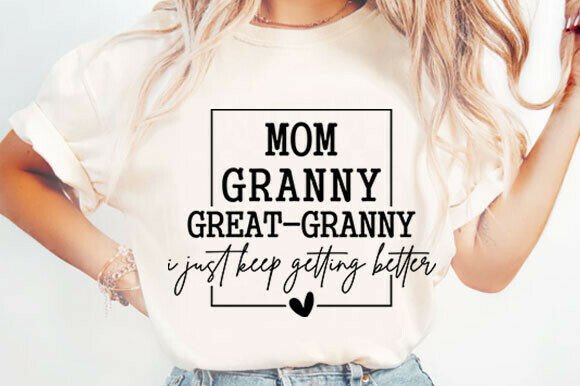
The immediate appeal of this machine embroidery design source lies in its clear hierarchy. Visually, the layout suggests a stacking or cascading effect that honors three generations simultaneously. From a digitizing perspective, this vertical flow is generally safer for garment construction than wide, horizontal layouts that can distort when worn. However, because this is provided as a PNG graphic rather than a pre-digitized embroidery file, the success of your final product depends entirely on how you interpret these lines during the digitizing process.
When I look at this artwork, I see immediate potential for a mixed-media approach. The text elements lend themselves beautifully to clean satin stitch columns, provided they are sized correctly. If the lettering in the PNG is too ornate or thin, you will need to simplify it for stitching. I often find that converting delicate script fonts into fill stitch or doubling up running stitch lines creates better legibility on textured fabrics like sweatshirt fleece. The mood here is nostalgic yet bold, suggesting that high-contrast thread colors against neutral backgrounds will yield the most professional results. This isn't a design for subtle, tone-on-tone monochromatic stitching; it demands visibility to celebrate the titles it displays.
Real-World Application: The Custom Sweatshirt Test
To truly judge this design, I mentally placed it in a current project scenario: creating a premium crewneck sweatshirt for a client wanting to honor her role as a new great-grandmother. In this context, the Mom Granny Great Granny Png serves as the centerpiece of a personalized gift. Sweatshirts are unforgiving canvases; the pile of the fleece can swallow fine details, and the stretch of the knit can warp rigid designs.
For this application, I would treat the PNG as a guide for a combination design. I’d likely use an applique design technique for any large background shapes or banners within the graphic to reduce stitch density and prevent the garment from becoming bulletproof. Heavy density leads to puckering, especially on stretchy knits. By using applique for the base and precise satin stitches for the generational text, we maintain the softness of the custom apparel while ensuring the message remains crisp. This approach also increases the perceived value of the handmade product. Customers recognize quality when a design sits flat and moves with the fabric rather than fighting against it.
Navigating Fabric Limitations and Hoop Constraints
While this graphic is versatile, there are specific environments where caution is required. As an experienced reviewer, I must emphasize that not all fabric texture types are created equal. If you plan to use this on a structured item like a cap or hat, the vertical stacking inherent in "Mom Granny Great Granny" themes can be problematic. Caps have limited vertical space above and below the center seam. You may need to rearrange the elements of the PNG into an arc or semi-circle to fit the curved surface without distorting the text.
Furthermore, consider the hoop size limitations before committing to a project. Multi-generational designs often require significant height. If you are working with a standard 4x4 hoop, you might be forced to shrink the design to a point where the smallest text becomes illegible once stitched. Always measure the usable area of your hoop against the aspect ratio of the PNG. For smaller items like baby onesies or kitchen towels, verify that the design complexity matches the scale. Tiny lettering on a baby embroidery project is a common failure point; if the text in the PNG cannot be rendered clearly at 2mm height or larger, it is better suited for adult-sized tote bag design work or wall decor instead.
Commercial Viability for Etsy Sellers and Makers
For my fellow Etsy seller and craft business owners, the commercial utility of this asset is significant, but only if executed with professionalism. Buyers searching for holiday embroidery or Mother’s Day gifts are looking for clarity and emotion. This design hits both marks, but your listing photos must reflect the actual stitched outcome, not just the digital mockup. Using this PNG to create accurate printable mockup previews is helpful, but nothing builds buyer trust like a photo of the actual finished product.
When integrating this into your shop's design assets, consider offering variations. The raw PNG allows you to customize names or dates easily before digitizing, which is a massive selling point for commercial embroidery services. However, you must be vigilant about licensing. Since this is a digital product, confirm whether you have the rights to sell physical items made from it or if it is restricted to personal use. Professionalism extends to respecting intellectual property. Additionally, ensure your digital embroidery file derived from this PNG is optimized for multiple machine formats to maximize your customer base if you choose to sell the digitized version itself.
Critical Designer Notes for Success
Before you load this design into your software or machine, adhere to these practical protocols to ensure your embroidery project succeeds:
- Test on Scrap Fabric First: Never run a new interpretation of this PNG directly on a final garment. The interaction between the stabilizer, needle, and thread must be validated. Use a scrap of the exact material you intend to use for the final piece.
- Check Thread Color Contrast: Test the design in both black-and-white and full-color mockups. Ensure the distinction between "Mom," "Granny," and "Great Granny" is visually separable through color blocking or spacing.
- Review Stitch Density: If digitizing this yourself, keep fill stitch densities around 0.4mm to 0.5mm for standard fabrics. Overly dense areas in a multi-line text design will cause registration issues and fabric distortion.
- Inspect Small Details: Zoom in to 100% view in your embroidery software. Any element thinner than 1mm may need to be converted to a running stitch or removed entirely to prevent thread breaks.
- Verify Licensing: Re-read the product description carefully. Confirm you are cleared for small shop product sales before listing any finished goods.
- Stabilizer Selection: For knit fabrics suggested by this style, use a cut-away stabilizer to support the weight of the multi-generational text. Tear-away is rarely sufficient for designs with this much vertical coverage.
The Mom Granny Great Granny Png offers a wonderful foundation for celebrating family lineage through needle and thread. It possesses the right emotional resonance and visual structure for successful T-Shirt Designs and keepsakes. However, its transition from a digital graphic to a tangible heirloom requires technical discipline. By respecting the physics of embroidery—managing density, choosing appropriate substrates, and testing rigorously—you can transform this unique digital asset into a cherished personalized gift that honors the women who built your family history. Approach it with the craftsmanship it deserves, and it will serve your business and your loved ones beautifully.